Building Scientists from the Ground Up: 50 Years of Chemistry Research
Posted March 13, 2026 in Feature Friday, Featured News, JMU Libraries News
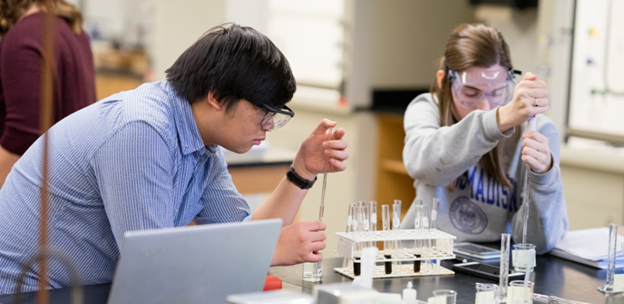
This spring, JMU’s Chemistry & Biochemistry department will celebrate the 50th anniversary of its Spring Symposium, marking five decades of formally recognizing undergraduate research. While research has long been part of the department’s culture, the symposium created a lasting tradition of celebrating it publicly.
Today, that culture is thriving. About 90% of chemistry majors participate in undergraduate research, well above the national average, and roughly 50 students conduct summer research each year, many through a long-running National Science Foundation Research Experiences for Undergraduates (REU) program.
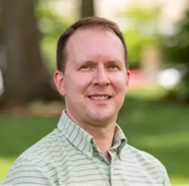
According to Chemistry faculty member Chris Berndsen, the department’s undergraduate focus is intentional. “We all came here because we wanted to do high-quality science with undergraduates,” he says. With nearly $10 million in instrumentation—comparable to many graduate programs—students gain hands-on experience rarely found in undergraduate-only Chemistry departments.
Behind the scenes, JMU Libraries has been a steady partner in support of undergraduate research, including Kathryn Shenk, the liaison librarian to the department of Chemistry & Biochemistry.
Teaching Research Skills: Meet Kathryn Shenk
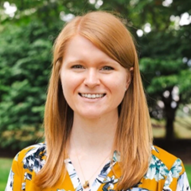
“The Chemistry & Biochemistry department is filled with diverse voices and areas of expertise,” she says. “This keeps me on my toes as a liaison. The potential research questions that I might be asked are as limitless as they are exciting.”
On average, Shenk teaches about 15 information literacy sessions in Chemistry each academic year. These sessions help students navigate primary literature, evaluate scientific sources, and manage research data effectively.
“Throughout my time at JMU, the Chemistry & Biochemistry department has been a close partner in scaffolding information literacy throughout the curriculum. This has led to meaningful Libraries collaborations that help to foster student research skills.”
Berndsen notes that formal library instruction has made a measurable difference:
“We know our students come out very well prepared to find information,” he says. “Having that formal instruction from the Libraries has really made a positive impact on the way our students are able to navigate the scientific literature effectively.”
That foundation is especially important as the department scales up research experiences—not just for majors, but for non-majors in course-based research labs. “The Libraries have been partners in the success of our department,” Berndsen adds, helping faculty provide high-quality research experiences at a large scale.
Advancing Nuclear Chemistry Through Access: Meet Connor Gilhula
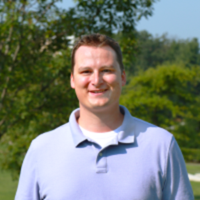
One of the department’s newest areas of growth is nuclear chemistry, led by faculty member Connor Gilhula. His research focuses on radioactive elements—work that often requires hard-to-find historical sources.
“The Libraries have been critical to advancing my research. As a nuclear chemist, I study the chemistry of radioactive elements. Lots of important primary sources in this branch of science are hard to come by… I rely on the Interlibrary Loan system at JMU. With only a few keystrokes, they deliver digital copies of these documents to me in less than 24 hours. As they say, a day in the library saves a week in the lab!”
JMU Libraries has also supported public scholarship. When the department hosted world-renowned scholar Professor Polly Arnold, the Libraries helped secure screening rights for a public showing of Nuclear Now in downtown Harrisonburg, drawing nearly 200 attendees.
Becoming a Scientist: Meet Andy Neumann
For sophomore Andy Neumann, research in JMU’s nuclear chemistry lab has been transformative. He is currently working on targeted alpha therapy, an emerging medical treatment that uses radioactive isotopes to target cancer cells while minimizing damage to healthy tissue. He describes his most recent project:
“Currently, I’m working on creating novel chelators that bind to radioactive metals without breaking apart due to the high-energy radiation and then testing their functionality with radioisotopes and instrumentation in our nuclear chemistry lab at JMU.”
He was surprised by the level of responsibility he’s been given:
“As a fully undergraduate chemistry program, students are able to occupy roles that would otherwise be reserved for graduate students.”
Research begins in the literature as much as in the lab. Neumann relies on databases such as Scopus and CAS SciFinder to explore prior publications and guide experimental design.
“Approaching a research project can feel daunting at first… Access to scientific literature and databases helps narrow down the steps required to complete a project and can even act as an encouraging reminder that your goal is possible.”
The experience reshaped his future plans.
“Prior to starting my research, I never viewed myself as a scientist… Now, nearly a year of research later, I couldn’t picture myself as anything but a scientist and plan to pursue a PhD after I graduate.”
Research Beyond the Lab
The department’s impact stretches far beyond campus. Faculty and students present at national conferences, collaborate with national laboratories and engage in community outreach—from local elementary school partnerships to public science events.
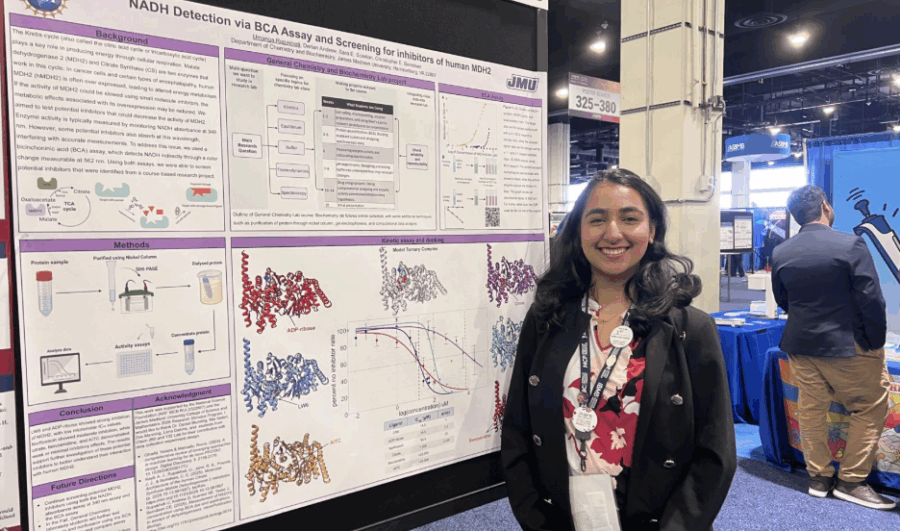
As the department prepares for its 50th Spring Symposium this April 23-24, faculty hope to invite back past speakers, explore the history of the Chemistry department at JMU, and celebrate five decades of inviting undergraduate research into the spotlight.
From the beginning, JMU Libraries has provided key infrastructure to make this research possible—helping students move from asking questions to answering them, from reading the literature to contributing to it.
And as the next era of nuclear chemistry and undergraduate discovery unfolds, the partnership with the Libraries continues.
This story is part of the JMU Libraries Feature Friday series. If you’d like to recommend a person or project connected with JMU Libraries to feature in this series, contact us at libraries@jmu.edu.
Learn more about the research help available through JMU Libraries.