Carrier Library Self-Guided Tour
Welcome to Carrier Library
Originally opened in 1939 as Madison Memorial Library, this building was thoughtfully reimagined, restored and renovated in 2026 to support learning, research, teaching and creativity for JMU and the local community. Here, Dukes and community members can learn from the past and create new futures. Housing 4 miles of books and providing access to new media resources, Carrier Library bridges our foundational print heritage with innovative spaces for digital scholarship and creative expression. On this self-guided tour, you will discover inspiring reading rooms, active teaching and learning spaces, galleries and more. Please ask at a Service Desk if you have any questions!
Ground Floor Highlights
1
The Stan (‘54) and Rosemary Jones Wing
and Rosemary Jones Wing
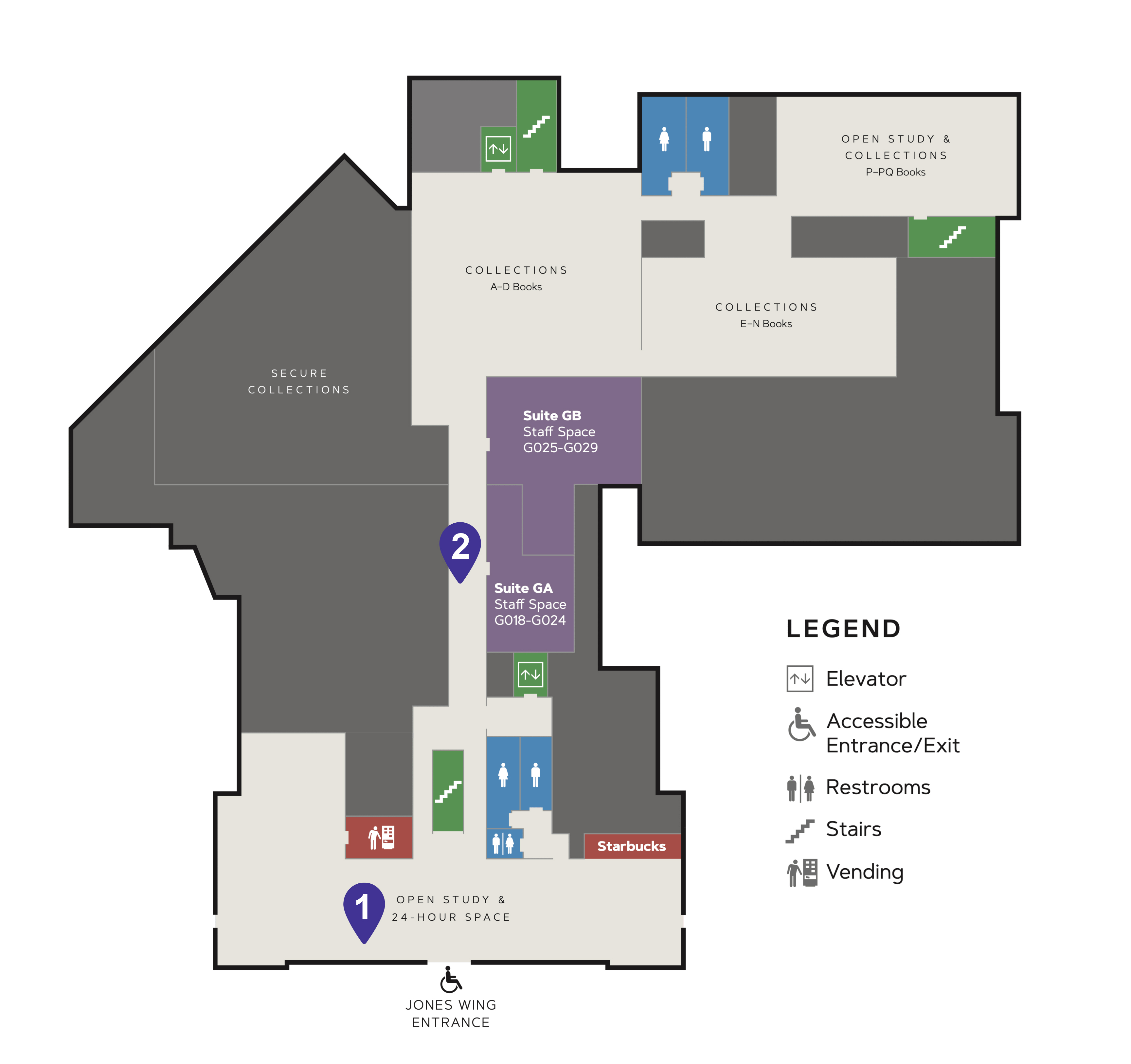
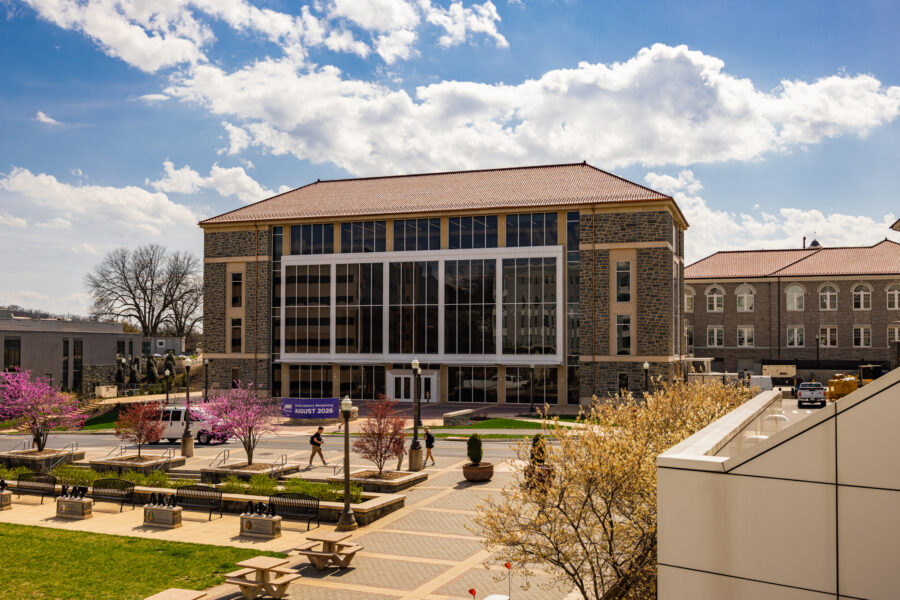
Clad in traditional Bluestone, this 56,000-square-foot expansion creates an inviting new entrance along Grace Street. The light-filled Jones Wing seamlessly connects historic Carrier Library to future-focused learning, offering versatile study areas, advanced technology spaces, and secure 24-hour access designed to support student collaboration and research.
2
Ground Floor Gallery
One of Carrier’s two student-centered exhibition spaces jointly supported by JMU Libraries and the School of Art, Design, and Art History.
24-Hour Space
Designed in response to student requests for more 24-hour study options, this lobby balances late-night academic needs with daytime functionality. Amenities include restrooms and vending machines. After hours, retractable gates and JMU ID card readers ensure a secure, round-the-clock study environment.
Café
Conveniently located in the Jones Wing Lobby, this Starbucks location managed by JMU Dining offers drinks and food options.
Patrons’ Bookshelf
First opened in 1939, Carrier Library has grown alongside James Madison University for generations. This sculptural display honors donors who continue that legacy today, supporting the Libraries’ mission through special gifts that result in books being place here in their honor.
First-Floor Highlights
1
South Entrance
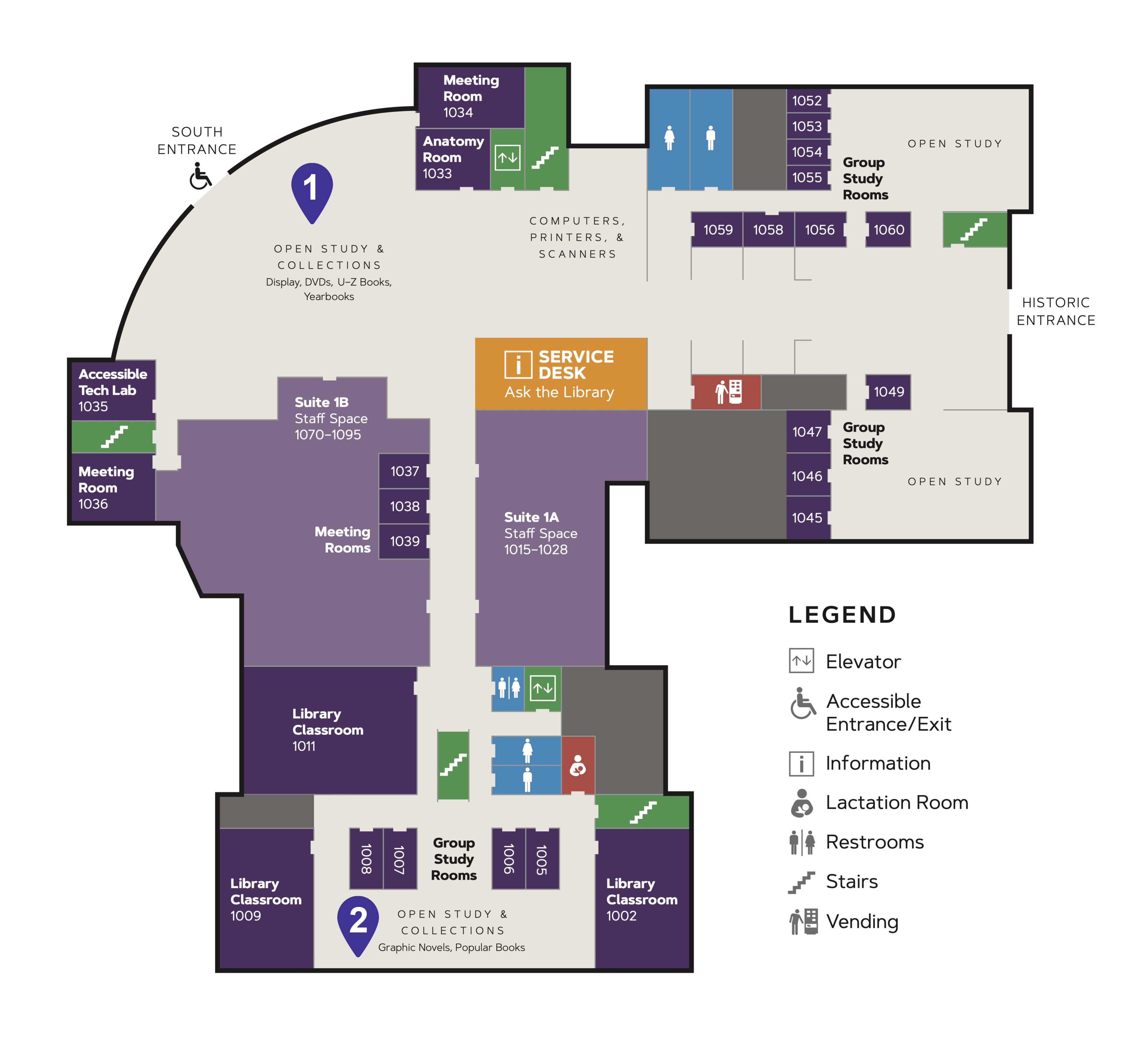
Located inside the South Entrance, the Graham South Commons features ample study seating and library collections, including book displays. This light-filled glass radius transforms the former 1980s entrance — whose original footprint remains visible in the shape of the second-floor balcony above — into a welcoming gateway. The space also honors JMU history with busts of former President Dr. Ronald E. Carrier and First Lady Edith J. Carrier, for whom the building is named.
Anatomy Room
Named the Thomas Family Anatomy Lab, this space offers hands-on access to three-dimensional anatomical models, mirroring the popular anatomy room in Rose Library. This room is open to all JMU students for interprofessional collaboration and study.
Ask the Library Service Desk
Positioned for visibility from two entrances, the Ask the Library Desk is Carrier’s hub for checking out materials, navigating the building, and connecting with library experts. When standing at this central vantage point, sightlines extend in three directions — embodying Carrier’s design as the literal and intellectual crossroads of campus.
Library Classrooms
Designed for Libraries-led instruction sessions, these three classrooms feature flexible furniture to support active learning. One of these spaces is named the Mathie Classroom.
Steps of the Shenandoah
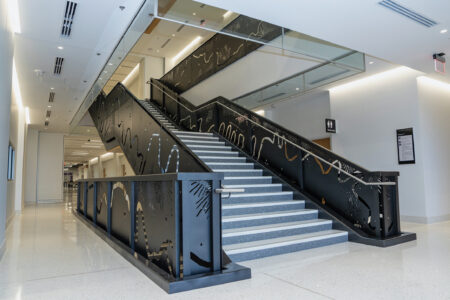
Inspired by historic maps of the Shenandoah Valley, the design of the McCormack Steps of the Shenandoah evokes the winding path of the Shenandoah River. Its metal panels were custom fabricated by a local company, further grounding Carrier Library in the valley that JMU calls home.
2
Open Study and Collections
Overlooking the Student Success Center, this double-height space in the Jones Wing is sunlit by day and glows like a beacon at night, highlighting the heart of the library for passersby. This area offers versatile study seating alongside graphic novels and popular books.
Historic Atrium and Lobby
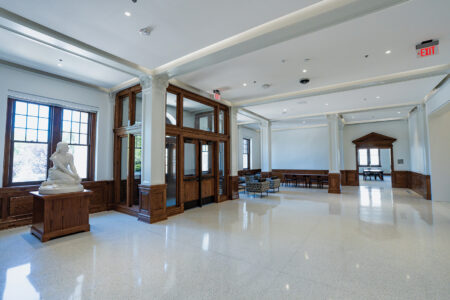
This atrium occupies the footprint of the 1939 Madison Memorial Library’s structural stacks, where collections were stored. Transforming these low-ceilinged stack levels — beloved by generations but not accessible — has dramatically opened the space to natural light. The restored lobby within the McCormack Historic Entrance features an original 1939 staircase preserved across every renovation. This space houses the iconic Joan of Arc statue — a campus treasure since 1917 that stood in this lobby when the building opened in 1939. Overhead, original 1939 plaster column capitals, featuring a “lamp of knowledge” motif, have been preserved and restored.
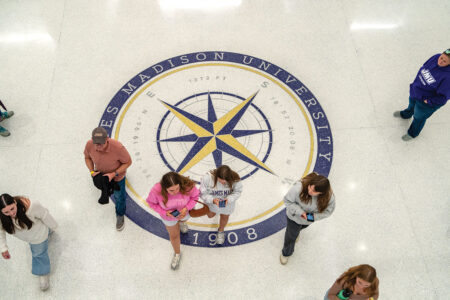
Open Study with Preserved Column Brackets
Named the McCormack Reading Room, this study space features original 1939 plaster column brackets once hidden by 1960s drop ceilings and meticulously restored by plasterwork specialists.
Open Study with Decorative Fireplace
Named the Hinshaw Reading Room, this space includes original features such as a decorative fireplace and woodwork. The tables and chairs are also original to Madison Memorial Library. To upgrade infrastructure while retaining the aesthetic, craftspeople removed and reinstalled original wooden ceiling beams to conceal modern systems.
Second-Floor Highlights
1
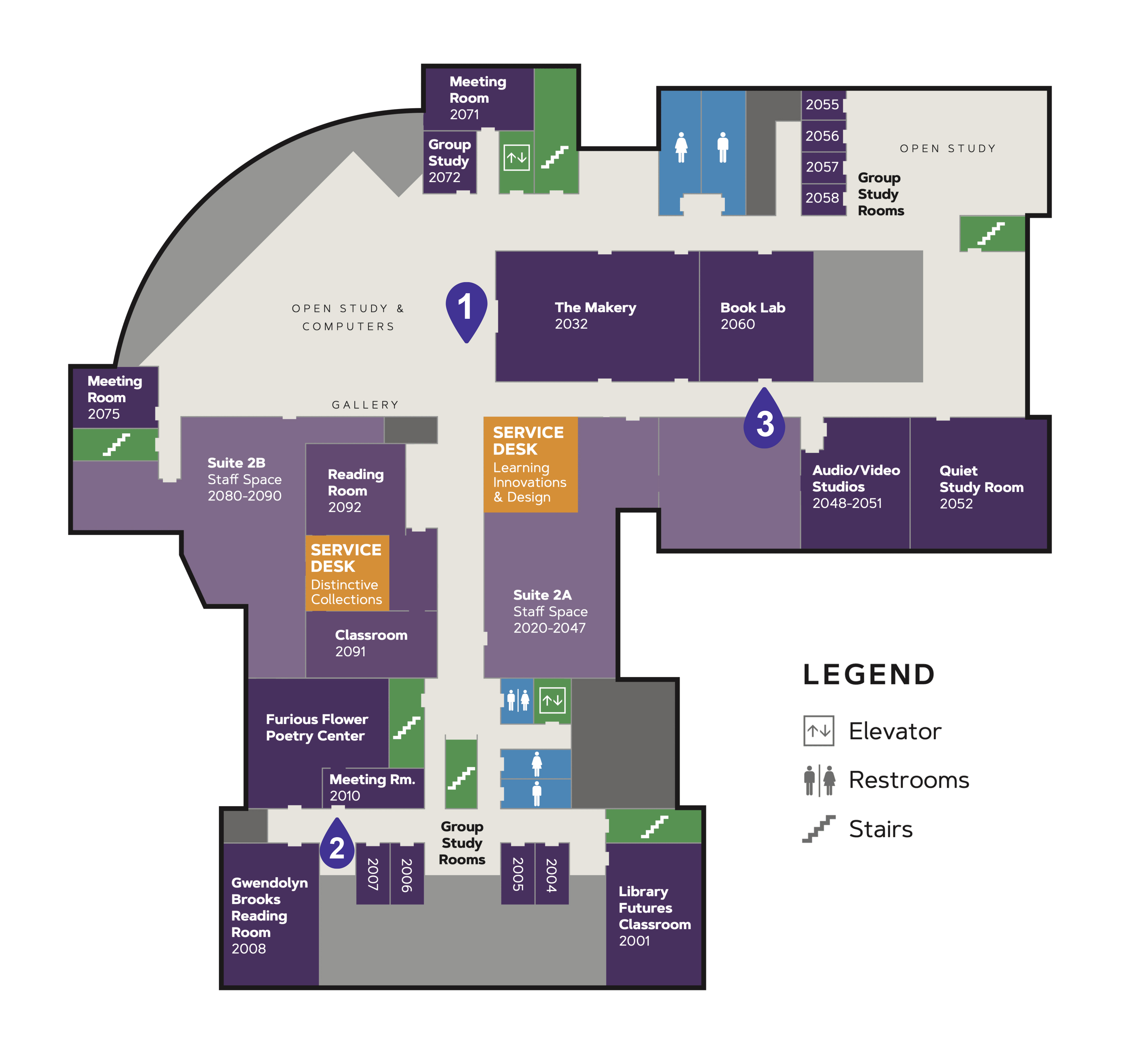
The Makery
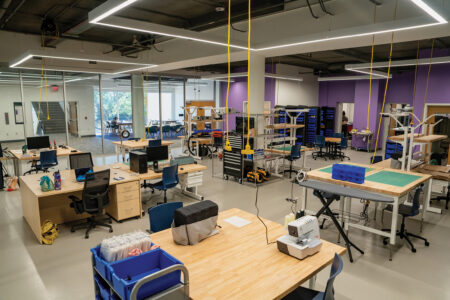
One of two JMU Libraries makerspaces designed to support JMU and the local community.
Gallery
The Updike Gallery is one of Carrier’s two student-centered exhibition spaces jointly supported by JMU Libraries and the School of Art, Design, and Art History.
Learning Innovations and Design Service Desk
Our service hub where faculty, staff, and students connect to our expertise in educational technology, multimedia equipment, academic software, classroom tech, makerspace and media production services, and instructional design.
Distinctive Collections Exhibit Gallery and Service Desk
This gallery showcases rotating exhibits of rare, unique, and historical materials from the Libraries’ Distinctive Collections. Beyond the gallery, our other Digital Scholarship and Distinctive Collections spaces are where we encourage the exploration of history and cultural heritage through innovative research methods and unique resources such as rare books, manuscripts, and archives.
2
Furious Flower Poetry Center
Carrier Library is the new home of the renowned Furious Flower Poetry Center, connecting the work of the nation’s first academic center dedicated to Black poetry with ongoing efforts to digitize, preserve and engage the Center’s distinctive collections stewarded by JMU Libraries. Across the hall is the Gwendolyn Brooks Reading Room. Designed in partnership with the Furious Flower Poetry Center, this light-filled reading room is available for anyone to use.
Library Futures Classroom
A flexible learning laboratory, named the Kelley Messerly Futures Classroom, where faculty and students experiment with emerging educational technologies and innovative teaching and learning methods.
3
Book Lab
Named the Brown Conservation Lab, this is a space for collections preservation and a site of active learning in the book arts for students, faculty, and staff. The intentional proximity to the Audio/Video Studio and The Makery illustrates how Carrier connects the oldest and newest ways of sharing knowledge.
Bluestone Walls
This interior Bluestone wall was part of the rear exterior of the original 1939 Madison Memorial Library. Covered during a 1960s expansion, uncovered during construction and restored in the 2026 renovation, this feature offers a tactile connection to JMU’s origins and the Shenandoah Valley, where the Bluestone was sourced. A second preserved wall is visible directly across the double-height atrium.
Audio/Video Studios
Recording spaces with studio lighting, a green screen, and high-end tools for media projects.
Quiet Study Room
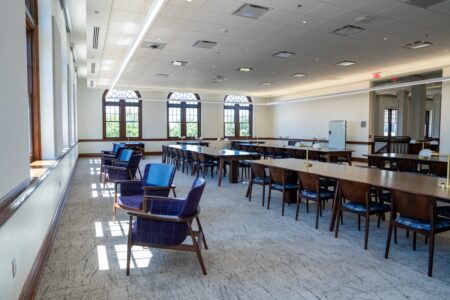
Named the Mosman Family Reading Room, this space offers 60 seats with traditional study carrels, soft seating, and large tables.
Third-Floor Highlights
1
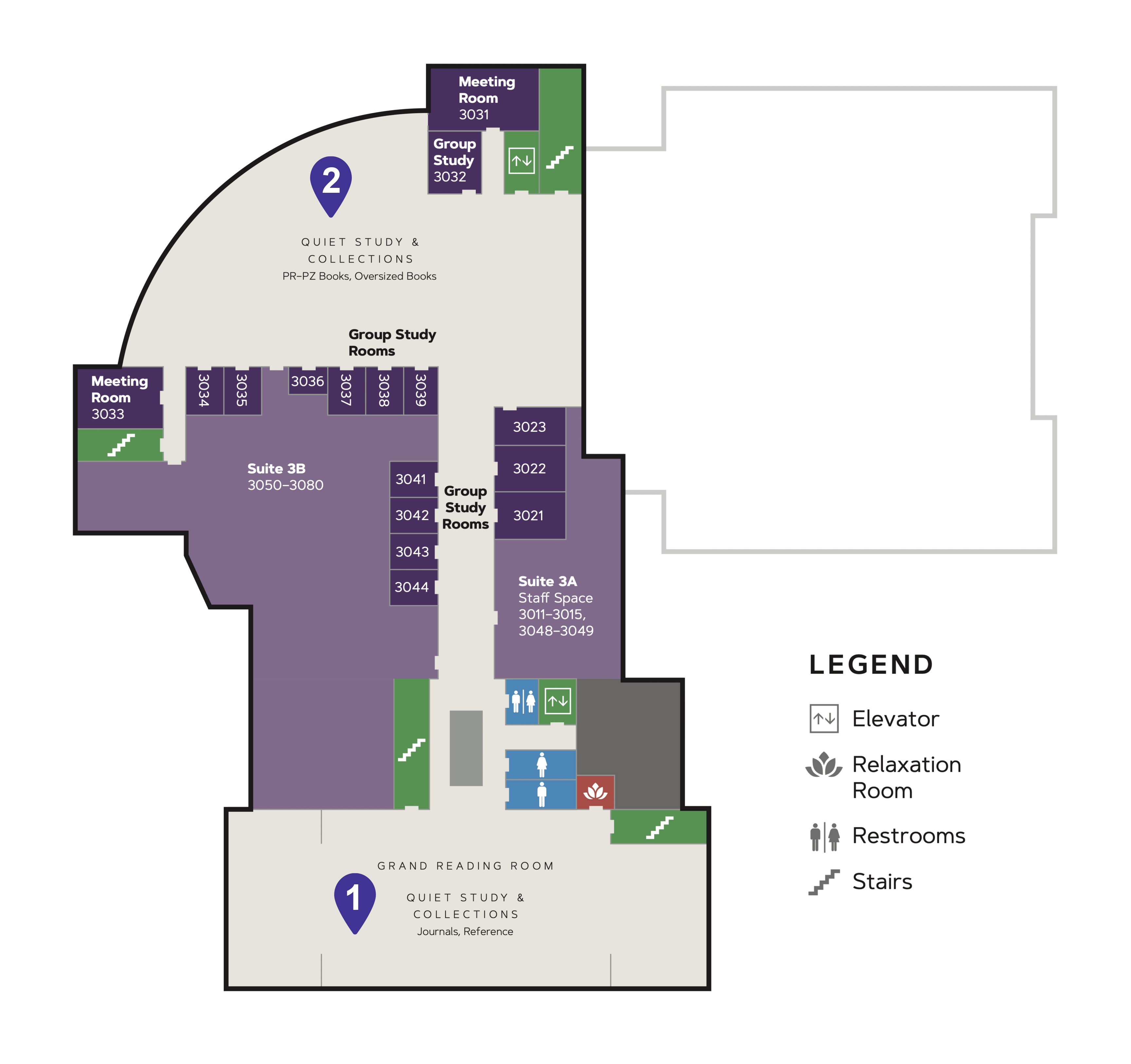
Grand Reading Room
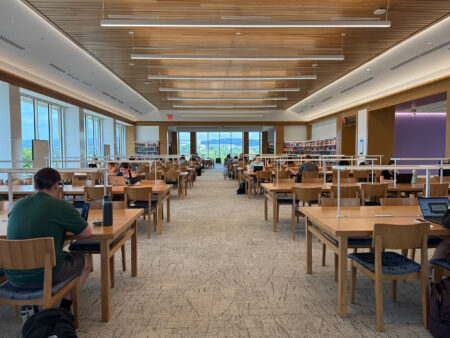
seating in a spacious, quiet setting
A quiet, 236-seat reading room featuring reference books, abundant natural light, and sweeping views of the Shenandoah Valley.
Group Study Rooms & Meeting Rooms
On the third floor are 14 of Carrier’s 34 group study rooms. Within the building there is a mix of reservable and drop-in group study rooms. Designed to maximize space efficiency, select staff meeting rooms feature JMU ID card readers that allow student use as open study spaces during evenings and weekends.
2
Quiet Study & Collections
A light-filled study area offering books on language and literature. Framed by views of campus, this space pairs print resources with flexible study options — including carrels, cozy focus pods, and café-style seating.
Photographs by Kelly Miller-Martin and Steve Aderton (’19)