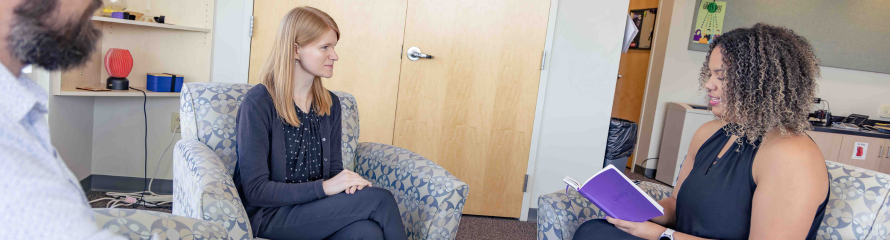
Data Consultations
Our Data Services Librarian is available to meet with JMU faculty, staff, and students seeking support with project-specific data questions, feedback on materials, or guidance tailored to their research, teaching, or learning goals.
Many data-related questions can also be addressed through our self-help resources, which offer guidance, tools, and best practices for managing, sharing, and preserving data.
If you’re not sure which option is right for you, request a consultation, and we’ll help you identify the best place to start.
Self-Help Resources to Get You Started
Our self-help resources can help you:
- Explore examples of file naming conventions, folder structures, and documentation templates
- Search for data sources
- Learn how to cite data
- Decide where to store or share your data
- Create a Data Management Plan using DMPTool
When a Consultation Is Helpful
Request a consultation with our Data Services Librarian to:
- Discuss project-specific questions about managing, sharing, or preserving data
- Align a data management plan (DMP) with grant or funder requirements
- Select an appropriate repository, license, or data sharing strategy
- Address considerations for working with human-subjects data, including consent, anonymization, and sharing limitations
- Develop reproducible workflows and documentation practices
- Design or complete a course assignment involving data skills, such as finding, evaluating, citing, or managing data (consultations do not cover data analysis)
Learn more about our Data Services Librarian.
What to Expect
- Length: Typically, 30–60 minutes
- During the consultation: We’ll discuss your goals, review any materials you bring, and recommend next steps, tools, or resources that might be helpful.
- Scope of support: We provide guidance and recommendations, but we do not perform data analysis, write DMPs or IRB protocols, or make compliance determinations.
Consultation Checklist
To make the most of your consultation, consider bringing any information you already have.
Don’t worry if you don’t have everything listed below. We can work from wherever you are in the process and figure out the rest together.
1. About Your Project
- Brief description of your project
- Key questions or goals for the consultation
- Timeline, deadlines, or grant requirements
- Collaborators or course context (if relevant)
2. About Your Data
- Types of data (e.g., spreadsheets, interviews, images, code, surveys)
- Approximate size or volume (if known)
- Tools or software involved (e.g., R, NVivo, Qualtrics)
3. Sensitivity & Ethics (if applicable)
- Whether the data contain identifiable or sensitive information
- Whether the project involves human subjects
- Any IRB guidance or constraints you have received
- Privacy, confidentiality, or consent considerations
4. Storage & Organization (optional)
- Where your data are currently stored
- Who needs access and planned workflows
- Current workflows or organizational practices (e.g., file naming conventions, folder structures)
5. Documents You Already Have (if any)
You’re welcome to bring drafts or materials such as:
- Data management plan (DMP)
- Consent forms
- Codebook, README, or other documentation
- Syllabus or assignment instructions (for teaching support)
Even early drafts, notes, or partial notes can be helpful.
6. For Data Management Plans
If you’re preparing a DMP, consider starting a draft in DMPTool before your consultation.
7. Request Consultation
If you’re not sure where to begin (or if none of the above seems to fit your situation) please feel free to request a consultation. We’re happy to discuss your project from any starting point.